A metro Denver guide to testing and removal
Asbestos abatement in Denver starts with a lab result, not a scraper
A burst pipe, a kitchen fire or a remodel is about to tear into a building from before 1980. Colorado wants the suspect materials sampled by a certified inspector first, then removed under containment by a certified crew. This guide walks you through that order.
This site is an information guide. It holds no CDPHE asbestos certification and claims none. Check any inspector or contractor's certification with CDPHE yourself.
This site is a draft preview. No phone line or request form is connected yet, so nothing you send here reaches anyone.
Before anyone cuts
- Material
- Unknown until sampled
- Lab result
- Pending
- Who samples
- CDPHE-certified inspector
Found something suspect? Do these four things, in this order
Most asbestos trouble in a repair comes from doing these in the wrong order. Water can be pumped out and a fire scene stabilized while you wait for the lab. The suspect material itself waits.
-
Right now
Leave it alone. No cutting, sanding, scraping or demolition.
-
If it is already broken
If it is already broken, keep people out of the room and shut off any heating or cooling that could carry dust.
-
Next
Book a CDPHE-certified asbestos building inspector to take samples for an accredited lab.
-
If the lab finds asbestos
If the lab finds asbestos, a CDPHE-certified abatement contractor removes it before the rest of the work goes on.
Already cracked, sanded or scraped something? Read what to do in the next few hours.
Left alone, most asbestos stays put.
Sand it, scrape it or pry it loose, and it ends up in the air you breathe.
Restoration is the moment asbestos stops sitting still
For most of the twentieth century, builders put asbestos into floor tile and its black adhesive, pipe and boiler wrap, ceiling texture, joint compound and cement siding. Left intact, most of it does nothing. Cut it, sand it, crack it or pry it loose and the fibers go airborne, where you and your family breathe them.
Restoration does all of that on purpose. You pull up a soaked floor, tear out drywall after a fire or gut a basement for a remodel, and you disturb exactly the materials Colorado regulates. Sampling first costs you a few days. Skipping it can spread fibers through the house and leave you paying for a cleanup much larger than the original repair.
Five materials to sample before anyone cuts
-
Floor tile and black mastic
Vinyl floor tile, especially the 9-inch squares, and the black mastic glued under it.
Read the guide on floor tile and black mastic -
Popcorn and textured ceilings
Popcorn and other textured ceilings, plus some textured wall finishes.
Read the guide on popcorn and textured ceilings -
Pipe, boiler and duct wrap
White or gray wrap on old pipes, boilers and ducts.
Read the guide on pipe, boiler and duct wrap -
Joint compound and plaster
Drywall joint compound and older plaster.
Read the guide on joint compound and plaster -
Cement siding and shingles
Cement siding, some roofing and old window glazing.
Read the guide on cement siding and shingles -
You cannot tell by looking.
Color, size and age prove nothing. Only an accredited lab, working from samples a certified inspector took, can say what a material contains.
Use the room-by-room checklist
Testing and removal are two separate jobs
Different certifications, often different companies. Knowing which one you need saves you from paying for the wrong visit.
Inspection
Find out what you have
- A certified inspector surveys the materials your project will disturb.
- Samples go to an accredited laboratory.
- The written report says which materials contain asbestos, and how much.
- Colorado generally requires this before renovation or demolition that disturbs building materials.
Abatement
Remove it without spreading it
- A certified abatement contractor removes, encloses or encapsulates the material.
- The work area stays sealed and under negative air pressure.
- Waste gets sealed, labeled and taken to a permitted facility.
- Clearance air sampling confirms the area is safe before containment comes down.
How abatement works in Colorado, step by step
The building type, the materials and the quantities decide the exact requirements. The order rarely changes.
-
Inspection and sampling
A certified inspector finds the suspect materials the work will touch and sends samples to an accredited lab.
-
Plan, permits and notice
If the lab finds asbestos above the regulated amounts, the removal gets planned and any required CDPHE permit or notification is filed.
-
Containment
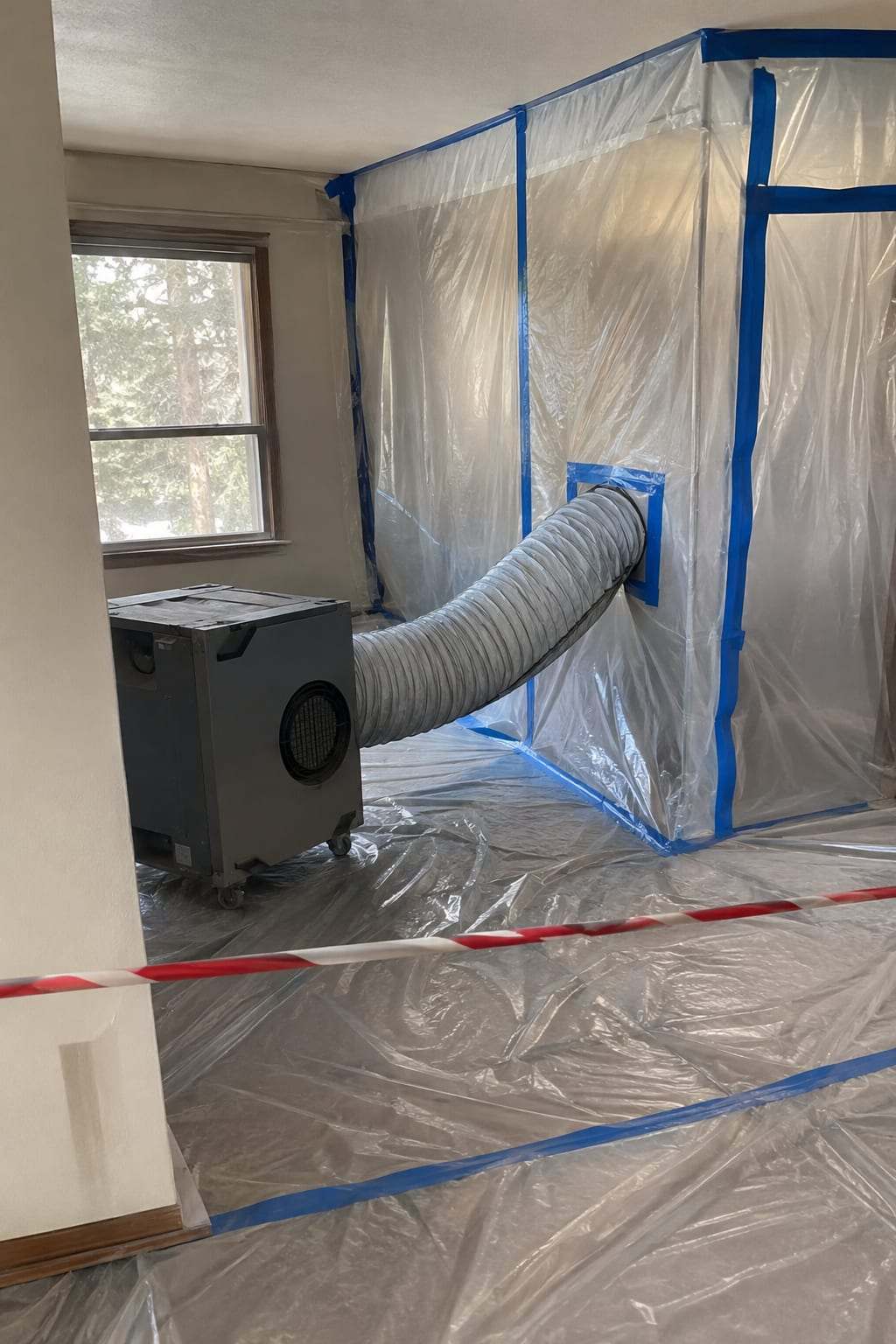
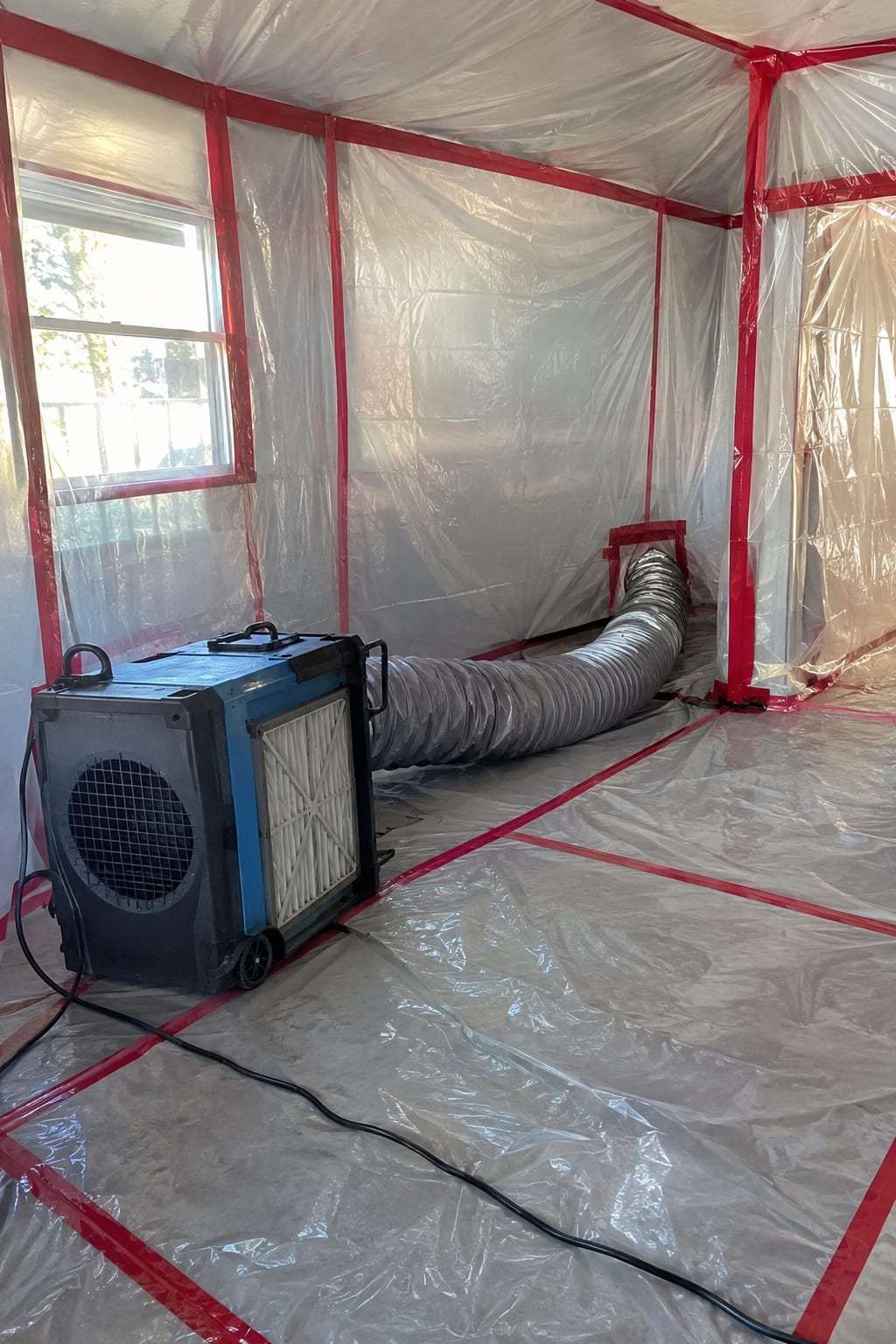
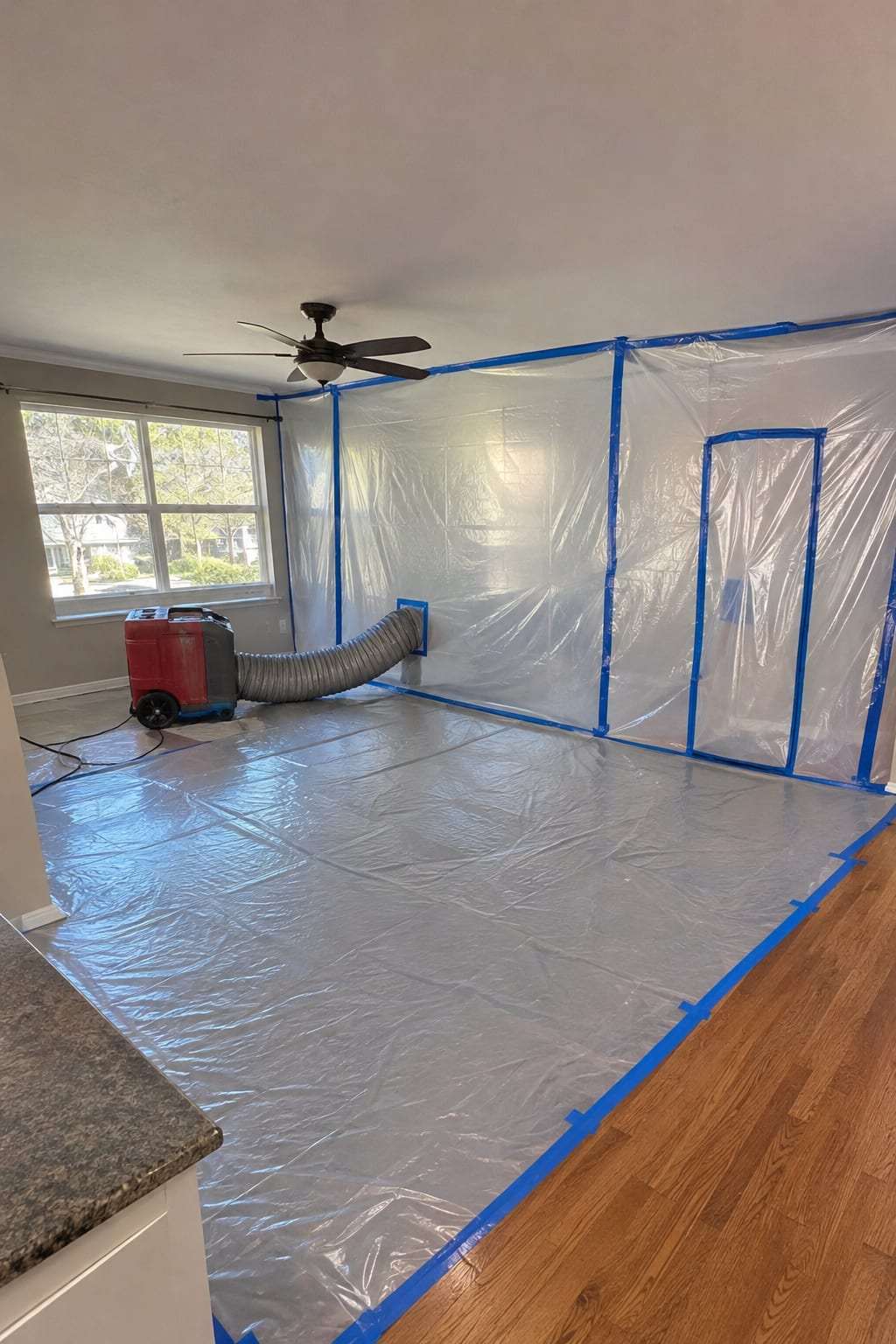
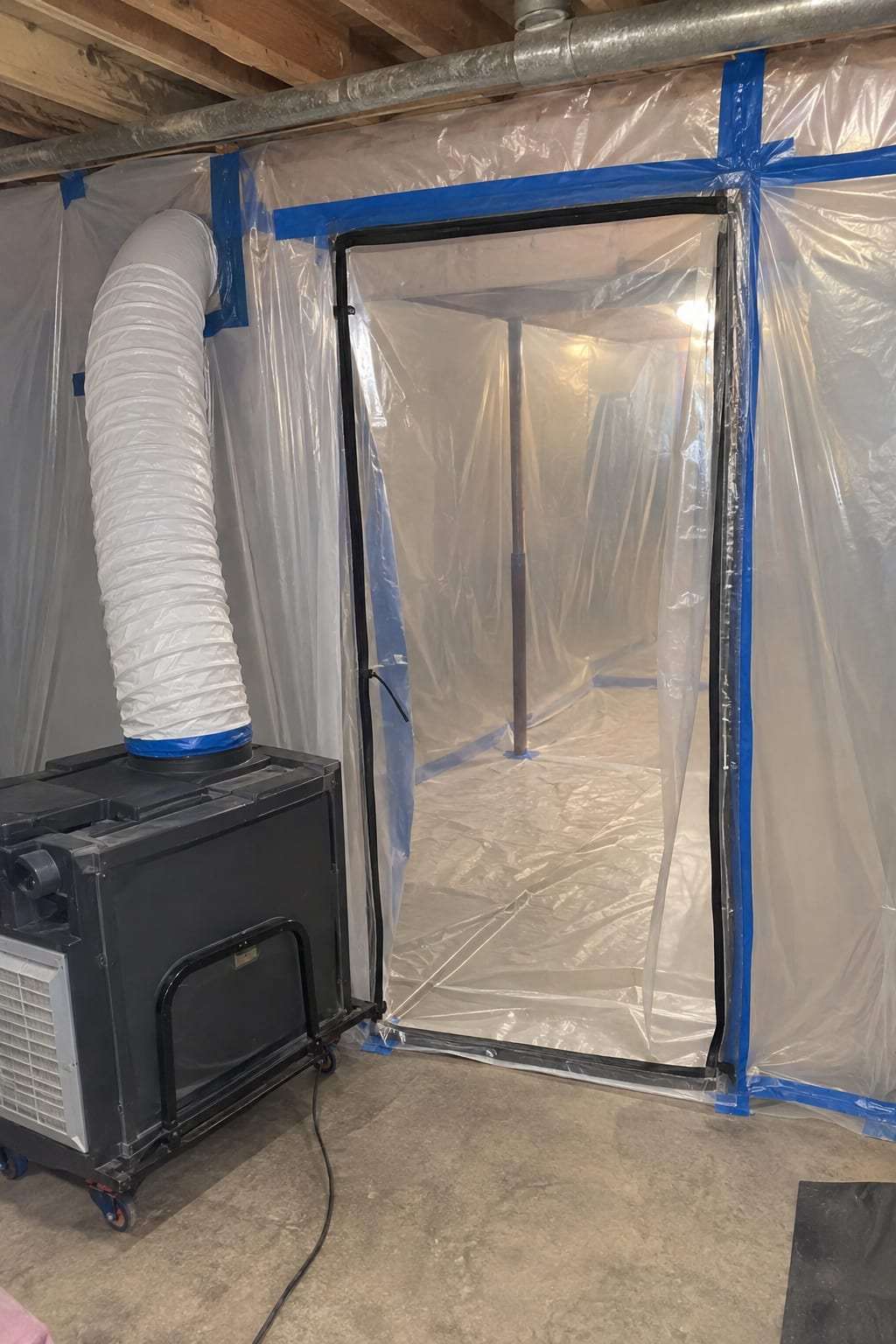
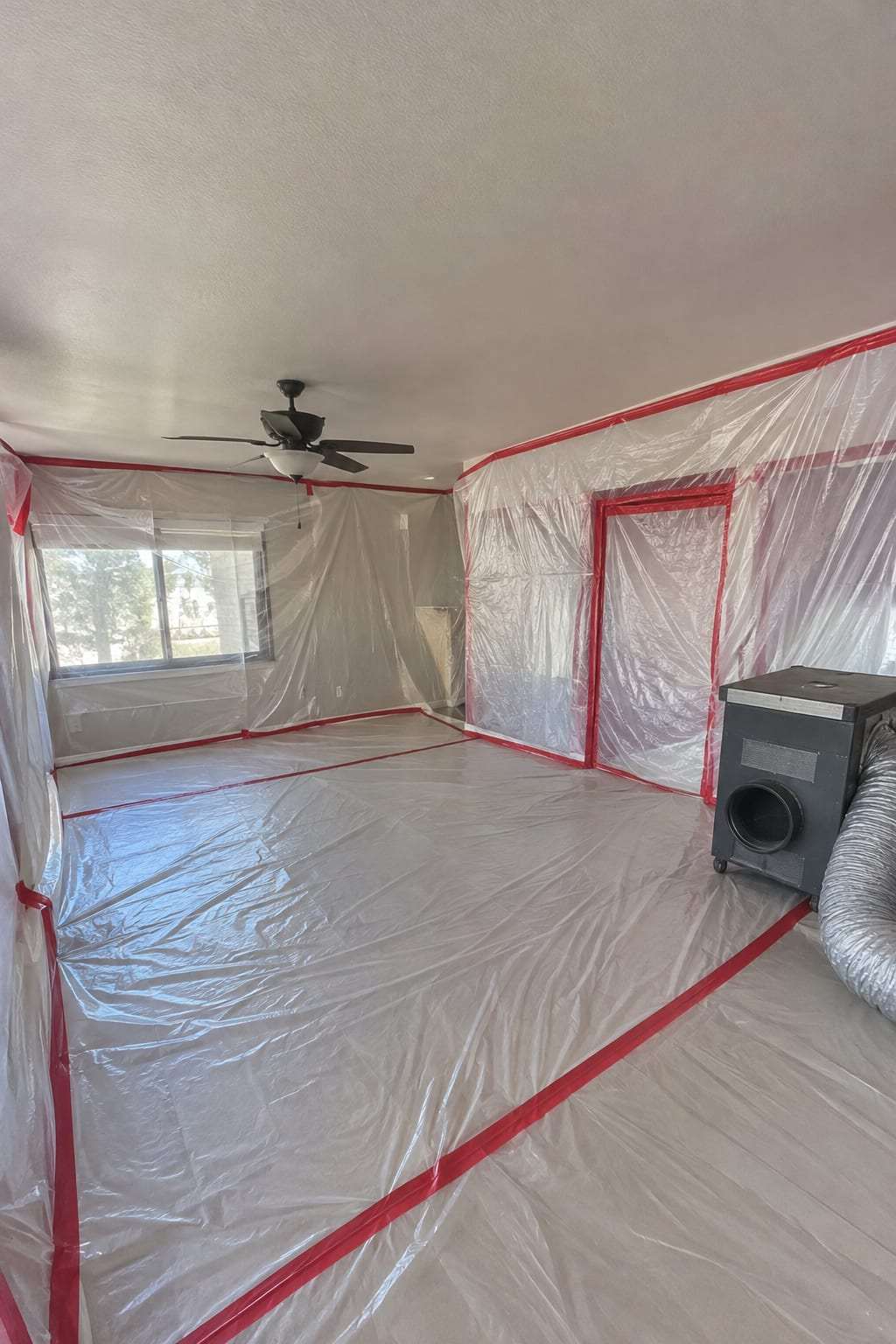
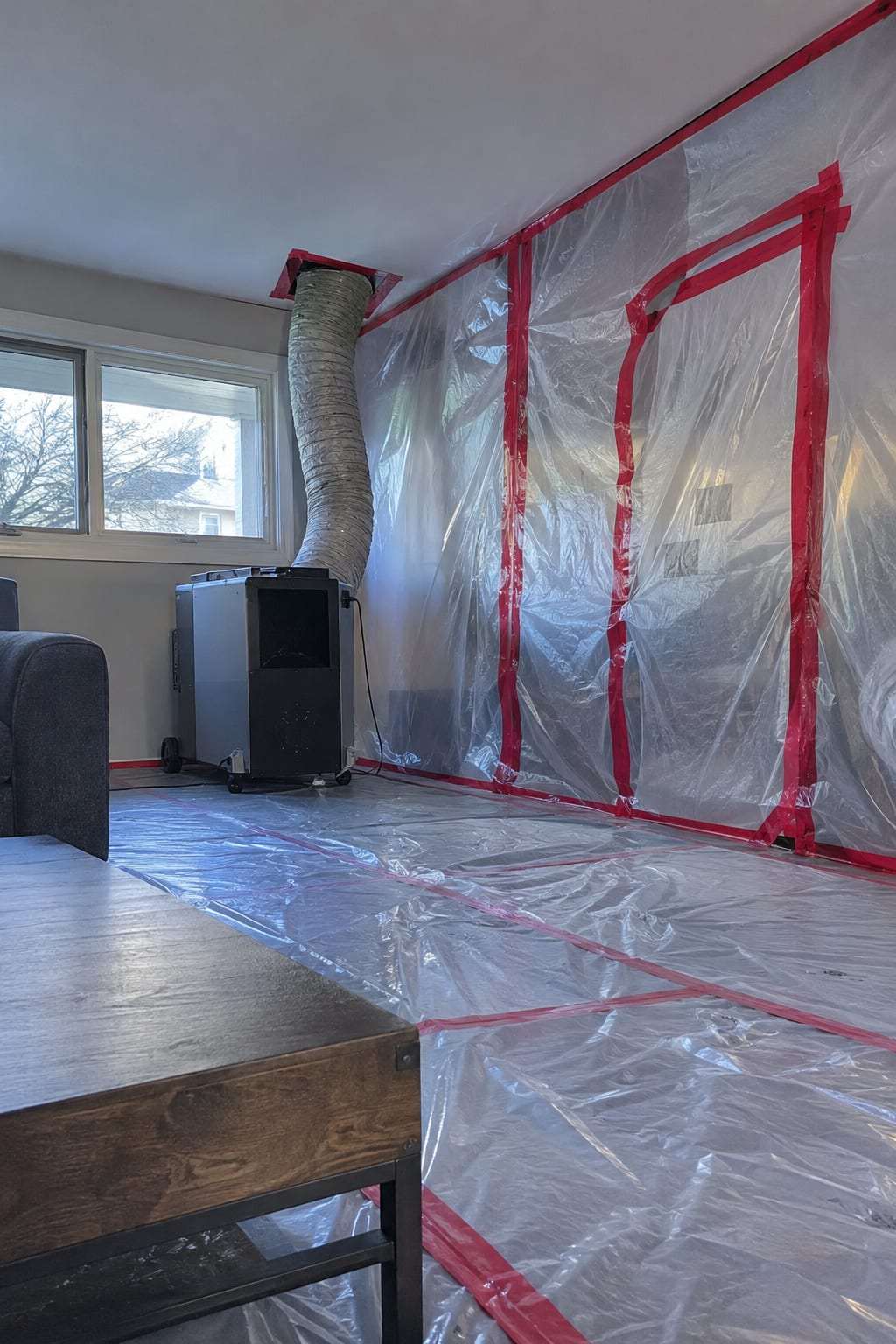
The crew seals the area in plastic, runs it under negative air pressure through HEPA filters and posts warning signs.
-
Controlled removal
Certified workers keep the material wet as they take it out, then bag and label it for a landfill permitted to accept it.
-
Clearance
The area gets cleaned, inspected and air sampled. Containment comes down only after it passes, and then the rebuild can start.
What containment looks like in a house
Plastic, tape and negative air turn one room into a sealed work zone, so the rest of the house stays livable.
Get the scope in writing before you sign
Above set quantity thresholds, Colorado requires a CDPHE abatement permit before work starts, and demolition has its own notification rules. Single-family homes and other buildings have different thresholds, so the quantities in your inspection report decide what applies.
Denver and other local building departments may also ask for proof of inspection before they issue a demolition or renovation permit. This is a summary, so check current requirements with CDPHE's Asbestos Program.
Inspection basis. Which inspection report the work relies on: who did it, their certification, the date and the lab results.
Materials and quantities. Every asbestos-containing material coming out, where it is and how much, in linear or square feet.
Containment and controls. How the area gets sealed off: sheeting, negative air, a decontamination area and wet methods.
Permits and notification. Whether the quantities trigger a CDPHE permit or notification, and who files it.
Personnel. The contractor's certification, plus the certified supervisor and workers assigned to your job.
Disposal. How waste gets packaged, labeled and transported, and which permitted landfill takes it.
Clearance. How the area passes before containment comes down: a visual inspection and air sampling by an independent party.
Why so many metro Denver buildings need a look
Much of the metro was built before 1980: early twentieth century Denver from Capitol Hill to the Highlands, then the post-war ranches and split-levels of Lakewood, Aurora, Englewood and Westminster. Plenty of those buildings still carry their original flooring, ceiling texture and pipe insulation.
Colorado regulates this work under Air Quality Control Commission Regulation No. 8, run by the Colorado Department of Public Health and Environment (CDPHE). In general, certified personnel inspect before any renovation or demolition that disturbs building materials, and certified contractors with the right permits handle abatement above the trigger levels.
Keep reading
Field guides, worksheets and walk-throughs on testing, permits, written scopes and clearance.
- Guides
Where asbestos tends to hide in Denver-area houses and buildings, why disturbing it is the real hazard, and how inspection, removal and clearance fit together under Colorado's rules.
- Resources
Open one of these before you pick up a scraper or sign a proposal.
- Service Area
A 1910 Capitol Hill walk-up and a 1965 Lakewood ranch hide different materials.
Questions owners ask first
How do I know if a material contains asbestos?
Not by looking at it. A certified inspector takes samples and an accredited laboratory analyzes them. Color, size and age prove nothing either way.
Is asbestos dangerous if it's left alone?
Intact, undisturbed asbestos-containing material generally poses little risk. The hazard starts when someone damages or disturbs it and fibers get into the air.
Do I need an asbestos inspection before renovating my house in Colorado?
Colorado's Regulation No. 8 generally requires an inspection before renovation or demolition that disturbs building materials, with some differences for single-family homes. Check current CDPHE guidance, or ask a certified inspector about your specific project.
Can I remove asbestos myself?
Colorado has specific rules for owners working in their own single-family home, and the work still carries real health risks. Most owners hire certified professionals. Read CDPHE's guidance before you attempt anything.
What happens to the removed material?
The crew wets it, double-bags or wraps it, labels it and hauls it to a landfill permitted to accept asbestos. You should get the waste paperwork.
Will abatement delay my water or fire damage repairs?
It can, because sampling and any removal come before the affected materials are torn out. Emergency steps such as water extraction and stabilization can often go ahead while you wait for results.
Can the same company test for asbestos and remove it?
Ask about independence. Many owners prefer an inspector and air monitoring firm separate from the abatement contractor, so whoever confirms the work is finished is not the one paid to do it. Either way, every person who inspects or abates must hold the certification Colorado requires.
Describe your project
This form is not connected. This website is a draft preview: no business has been confirmed to receive requests, so the fields below are switched off and nothing can be sent. In an emergency, call 911.
An older building, damaged materials or a remodel on the calendar?
Leave the suspect material where it is, keep people out of any damaged area and get it sampled by a CDPHE-certified inspector before demolition. Then check every contractor's certification with CDPHE before you sign.